In automotive parts distribution, every component follows a complex, multi-level path: from hundreds of suppliers across different regions and countries, through the central warehouse, between regional depots and logistics hubs, and finally — to the auto repair shop or service center where the part is needed “here and now.” Each stage requires precise tracking of thousands of items, monitoring delivery deadlines, managing diverse storage conditions, and quickly responding to unpredictable changes in demand. The complexity of the supply chain makes integrated technologies essential to ensure accurate inventory, fast delivery, and financial transparency at every step. AVDtrade, a company supplying high-quality automotive parts to the Ukrainian market, has built an efficient system to manage hundreds of suppliers and thousands of customers across Ukraine. The distributor grew from a small 40 m² auto parts shop in Zhytomyr to a major player with an extensive logistics network and its own warehouses, enabling delivery across Ukraine within 24 hours.
AVDtrade’s success is the result of a systematic approach, customer focus, and the adoption of modern technological solutions. Its migration to Microsoft Dynamics 365 Business Central opened a new path toward transparent, controlled, and predictable business processes. For the journey of implementation, AVDtrade chose SMART business as its companion and partner. Read the full story of the challenges, milestones, and achievements in this new success story!
At the Crossroads of Change: The Need for a New ERP System and How AVDtrade Chose Its Path to Transparency and Control
As sales volumes grew and the customer base expanded, the previous system for managing finances and operations gradually accumulated numerous customizations, lost flexibility, and became difficult to use and control. Like an old car with worn-out parts, it could no longer operate smoothly and often “slowed down” AVDtrade’s processes. Gathering up-to-date information in one place was challenging, financial control was fragmented, and it was difficult to get an accurate picture of where the company’s funds were — in transit, frozen between warehouses, or “stuck” somewhere in operational processes.
«This situation resembled the chaotic movement of particles in a collider, where each one has value, but without a coordinate system, it’s difficult to understand at which points they interact and what the result is. At a certain point in its journey, the company realized it could no longer move forward with the ‘old engine.’ The system that once helped keep direction could no longer keep up with the pace. The CEO and financial managers quickly realized it was time to switch to a new ERP platform that would allow them to see the actual movement of goods and funds at every stage, synchronize key business processes, and adapt the system to the specifics of auto parts distribution».

AVDtrade aimed for systematization and a clear, real-time understanding of what was happening with its finances. The company wanted a future ERP system to reveal process logic, support structured accounting, and generate management reports.
Before implementing the new ERP system, AVDtrade relied on different tools for each function. The commercial department used a separate solution for procurement and tracking the movement of goods between warehouses. The finance department experimented with various approaches: partly using in-house solutions and partly relying on third-party tools and services to organize financial processes. The warehouse operations ran on a WMS system, which remained a key part of the company’s logistics infrastructure. While this fragmented approach allowed the company to respond to market challenges, it gradually complicated data consolidation and created barriers to a holistic view. Departments “spoke different languages,” and compiling a complete picture required manually combining information from multiple systems.
The key requirements for the future ERP solution were based on the company’s business needs:
- Full financial visibility in one place — enabling managers to quickly understand where the company’s funds were, how they were distributed across operations, warehouses, and suppliers, and make timely decisions based on up-to-date information.
- Systematic and timely accounting — organized, consistent accounting processes forming the foundation for management decisions, allowing control of finance and operations at all levels of the company.
- A tool for measuring performance — the ability to evaluate costs and process efficiency, see how resources are allocated across different areas, and optimize business operations based on accurate data.
In short, financial transparency, systematization, and control became the starting point in selecting the new ERP system.
The company evaluated dozens of solutions, focusing on the following key criteria:
- Optimized implementation speed — the system needed to support a phased rollout, allowing the company to integrate new processes without disrupting daily operations while maintaining control over key business areas at every stage.
- Flexibility — preference was given to an ERP capable of adapting to changes in business processes and company growth, ensuring scalability and agility.
- Manageability — the company wanted a clear view of processes to understand what was happening at each stage and respond quickly to any changes.
- Predictable system behavior — it was expected that the system’s responses to various scenarios could be anticipated, with adjustments made to minimize risks.
- Process consistency — the system needed to provide a logical and structured integration of the company’s key processes, ensuring no step was left uncontrolled.
- Analytics and process measurability — the system was expected to monitor key performance indicators, measure costs, and optimize resource use.
- Integration with Microsoft products — the system had to provide seamless access to the Microsoft tools the company already used (Teams, Excel, Word, etc.), creating a unified IT ecosystem.
In addition, the new ERP needed to be user-friendly and accessible for all departments — finance, accounting, commercial, and logistics — meaning it shouldn’t require deep technical knowledge for daily use. It needed an intuitive interface, adapted terminology, and the ability to quickly train staff.
Ultimately, the choice fell on Microsoft Dynamics 365 Business Central, which met all of AVDtrade’s defined requirements.
«Searching for an ERP solution can be compared to choosing automotive paint materials: you open a catalog and face a huge palette of options, each with its own properties, shades, and purposes. The same goes for ERP systems, which offer a wide range of applications, integration possibilities, and customizations that must be evaluated against our business processes. Among all the options, Microsoft Dynamics 365 Business Central provided the most balanced and technologically advanced ecosystem».
Moreover, the company is convinced that the future lies with Microsoft technologies. This was another strong argument in favor of choosing a system that evolves proactively, meets modern challenges, and supports sustainable business growth — both technologically and operationally.
Hundreds of Processes and Thousands of Details: Challenges, Customizations, and Stages of ERP Implementation at AVDtrade
AVDtrade is a company where import, warehousing, and distribution are so closely interconnected that a single mistake in one department can affect dozens of other processes. Every new product follows a long journey: from ordering from a supplier abroad to appearing in the website catalog. The commercial department creates orders, uploads invoices, approves documents, and then the procurement department passes the invoices to the warehouse. There, product cards are created, items are classified, and only after that do the products enter the sales system and appear online.
Logistics then comes into play: courier schedules, routes, supply control — everything must be synchronized down to the minute. Meanwhile, the finance department tracks settlements, processes payments, and reconciles accounts with partners. The efficiency of this chain directly affects how quickly a customer receives their order.
For this reason, the ERP system needed to become the central link that unites dozens of processes into a single, logical structure.
Implementation Challenges: Acceleration Phase and Reaching Steady Speed
The project involved more than 20 people from AVDtrade — representatives from the commercial, procurement, category, finance, and logistics departments.
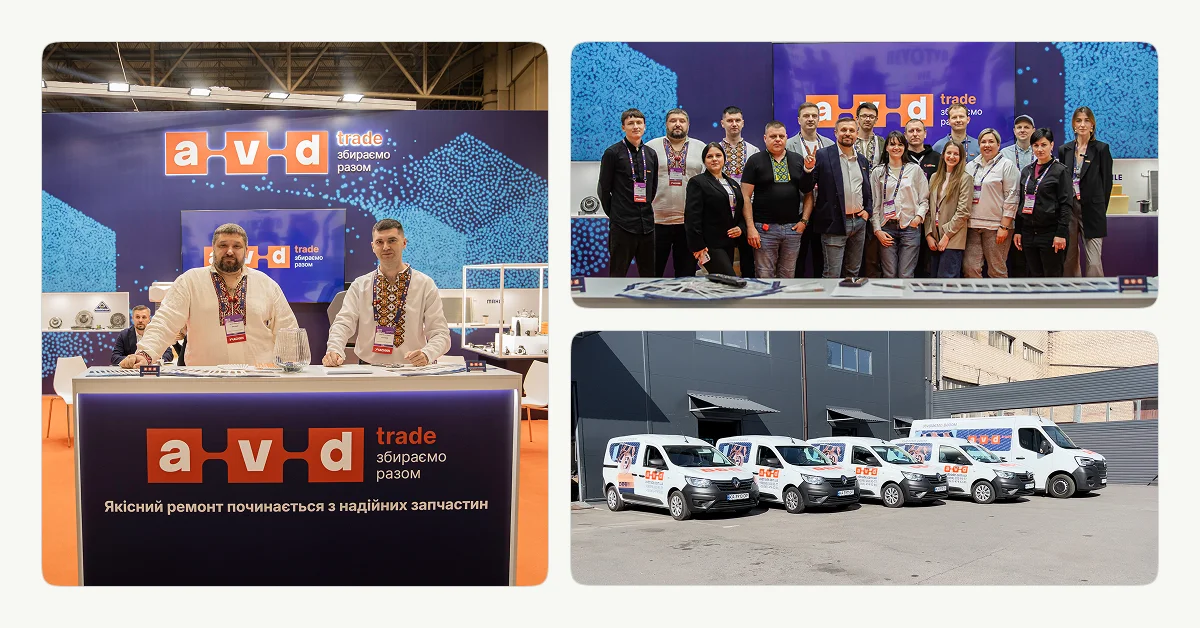
For SMART business, this was a special challenge: the client’s business required deep immersion in the world of automotive parts — including its item catalogs, cross items (alternative or compatible parts from different manufacturers), selections, search logic, and more.The first phase can be described as the two teams getting acquainted: AVDtrade and SMART business studied each other’s approaches to build a shared workflow logic, taking into account the client’s unique process structure from SMART business’s perspective. Over time, the teams began to operate as a single unit.
A key feature of the project was extensive process customization, with deep adaptation of the ERP system so that it not only reflected the business but could “think” like it.
Customizations covered nearly everything: financial accounting, procurement, sales, category management, and integration with other solutions. At each stage, additional developments were created, gradually turning Microsoft Dynamics 365 Business Central into AVDtrade’s digital core.
The journey was not easy: during the initial “acceleration” phase, understanding the interconnections posed challenges — for example, changes in the procurement module could affect sales or inventory levels. However, this experience became the key factor that brought the teams closer together.
«The vendor taught us to work methodically. We realized that tackling different parts of the processes chaotically, without clear sequencing, is ineffective. It’s important to proceed systematically: first describe the process, define responsibilities, train the team, and only then move to testing the results. Thanks to our joint efforts, we were able to complete all customizations and launch the system, reaching, so to speak, a steady speed».
Customizations Implemented in the System
Today, around 70% of the ERP system is customized for AVDtrade’s processes, with the SMART business team acting as the architect of the key modules.
Microsoft Dynamics 365 Business Central serves as the backend for AVDtrade’s website and B2B customer portal, ensuring consistency across all processes — from order creation to delivery.
The ERP system was deeply integrated with logistics systems. In particular, a large-scale integration with Nova Poshta was developed via API exchanges. This allows the system to receive shipment statuses in real time, track exactly where a product is, see when it has arrived or been delayed, and respond quickly to changes. The integration automated manual data reconciliation and made the logistics chain fully transparent — from order creation to customer delivery.
A significant portion of the work focused on customizing warehouse and logistics modules. Integration with the company’s WMS system now provides accurate stock levels, automates transfers between locations, and forecasts required inventory. The inventory log, tracking of OEM part numbers (helping to monitor specific items and their alternatives), and automatic document generation have all become part of the new digital workflow.
Document handling was also optimized: delivery notes are now automatically generated and printed, simplifying operations and reducing the risk of errors.
Another major improvement concerned wholesale customers. Previously, partners sent orders in large Excel files with hundreds of items, which had to be processed manually. Now the system processes these files automatically. This not only saved managers’ time but also strengthened a culture of transparency and systematization in customer management.
Processes for pricing and large databases were optimized as well. Just imagine: one person previously had to manually process around 200,000 items, account for additional costs, set prices, and then transfer all the data into the system. With Microsoft Dynamics 365 Business Central, these data are now automatically synchronized with the pricing journal, and any changes in Excel update instantly in the system.
Additionally, the team learned to work with configuration packages — a tool that allows creating or modifying groups of product cards according to specified parameters. Now, instead of processing 1–3 cards manually, 100–200 cards can be created in just a few minutes.
The combination of custom developments with the robust core capabilities of Microsoft Dynamics 365 Business Central has delivered tangible results. Financial and management reporting, for example, became simpler and more accurate. Data is automatically and consistently generated across departments, significantly reducing report preparation time. Built-in BI tools allow results to be analyzed via convenient dashboards, without manually extracting data from tables and juggling formulas. Each department can now see its real-time status in an understandable format.
The ERP implementation has significantly reconfigured the client’s business processes. But this was exactly the company’s goal — to establish systematization, standardize accounting, and accelerate operations.
Implementation Results, Team Role, and What Companies Should Prepare for When Choosing an ERP System
When AVDtrade began introducing its team to the new ERP system, some resistance was expected — people were not used to stepping out of their comfort zone and working in a new way. In the early stages, questions and doubts arose, such as: “Why do we need a new system if the old one was working fine?” Over time, however, everyone reviewed and improved their own processes to align with the new system. The company organized dozens of training sessions each week to ensure practical immersion in Microsoft Dynamics 365 Business Central.
«Answering colleagues’ question ‘Why do we need a new system?’ we gave this example: when someone has been driving a regular car all their life and suddenly gets a modern sports car, it’s natural to have questions — which buttons to press, how to maintain the car, why the doors open upward instead of sideways. Our task was to show how to use the system, why it’s more convenient, and how it makes life easier not just for the company, but for the employees themselves».
Indeed, embracing change is never easy, but systematic training and continuous vendor support allowed the team to quickly adapt and see the benefits of the new solution.
Step by step, the team began noticing positive effects. Specialists who were initially cautious about the new system now work confidently in the ERP, create their own Power BI reports, and even propose ideas to further develop system functionality.
Currently, around 200 employees use Microsoft Dynamics 365 Business Central — the majority of the team, working daily in a unified digital environment. The ERP serves as the central accounting system, ensuring data control, process transparency, and operational stability. Although the implementation journey was challenging, AVDtrade acknowledges that the results were worth it. The client emphasized that the team played a key role in the project’s success: motivated, professional, eager to learn, ready to take responsibility, and working with the vendor to find solutions.
Thus, for companies planning an ERP implementation, AVDtrade recommends paying special attention to forming strong test and integration teams.
At the same time, AVDtrade stresses that when choosing Microsoft Dynamics 365 Business Central, it’s important to understand that it is not a “system you have to bend your business around.” On the contrary, it is flexible enough to adapt to your processes if needed. AVDtrade pursued a deep transformation, consciously adapting both its processes and the system to its business needs in order to maximize the benefits of digitalization.
«“AVDtrade demonstrates that technological maturity is primarily about the ability to adapt IT solutions to the specifics of your own business, creating efficient, scalable, and “living” management systems.
What is this case about? It’s a story of control, transparency, and courage.
“Control” — because the company now clearly knows where its funds are at any given moment: in transit, frozen between warehouses, or held up in operational processes.
“Transparency” — because everything — from financial analytics to the exact location of auto parts — has become understandable and visible to the business.
“Courage” — because it takes real determination to change established processes that have been in place for years.
AVDtrade succeeded! And now the entire SMART business team proudly and respectfully watches as AVDtrade reaches a new, higher level of business management».

Do you want an ERP system as a ready-made solution or customized to the specifics of your individual business processes? Book a consultation, and the SMART business team will help you choose the optimal path for digital transformation and implement a solution aligned with your company’s goals.